NEW LEGUME SPECIES HIGHLIGHTS 2025
Colin Hughes (University of Zurich, Switzerland)
Here we present snapshots of 17 of the c. 70 new species of legumes published during 2025. The common threads that track a large majority of recently described legume species are: (i) they are mostly globally rare endemics, indeed, often narrowly restricted micro-endemics. That global rarity means that these species are of particular conservation value and concern because they are often threatened and endangered, and thus a vital element in completing the global inventory of legume species; (ii) most newly described legumes belong to large, species-rich genera; (iii) most new species papers are ever more comprehensively and beautifully illustrated.
This year’s new species highlights come from Argentina, Brazil, Chile, China, Ecuador, Guatemala, India, Mongolia, Pakistan, Tanzania and Thailand. They span tropical rainforest, tropical dry forest, Mediterranean, and temperate biomes, as well as diverse plant growth forms including procumbent annual herbs, lianas, shrubs, small trees and giant rainforest emergent canopy trees, a span that embraces the global distribution and ecological diversity of the legume family.
A new species of Adesmia that looks like Ephedra
Adesmia ephedroides (Papilionoideae) is narrowly endemic to the Valparaíso Region of coastal central Chile and is currently known only from the type locality in the Melón Mountain Range. It grows in crevices on rocky outcrops in sclerophyllous open Mediterranean-climate, rupicolous shrubland. The name ephedroides alludes to the resemblance of its numerous young, vertically orientated green branches, deciduous leaflets and persistent cylindrical petioles and leaf rachises to the leafless shrubs of the genus Ephedra and its strong resemblance to Ephedra chilensis, which grows in sympatry with A. ephedroides. Known from fewer than 100 individuals it is classified as Critically Endangered.
Rosende, B., Lavandero, N., Araneda, D. and Pérez, M.F. 2025. Adesmia ephedroides (Fabaceae, Faboideae), a new species from the Mediterranean-type ecosystem of Valparaíso Region, Chile. PhytoKeys 259: 301-317. https://doi.org/10.3897/phytokeys.259.156135
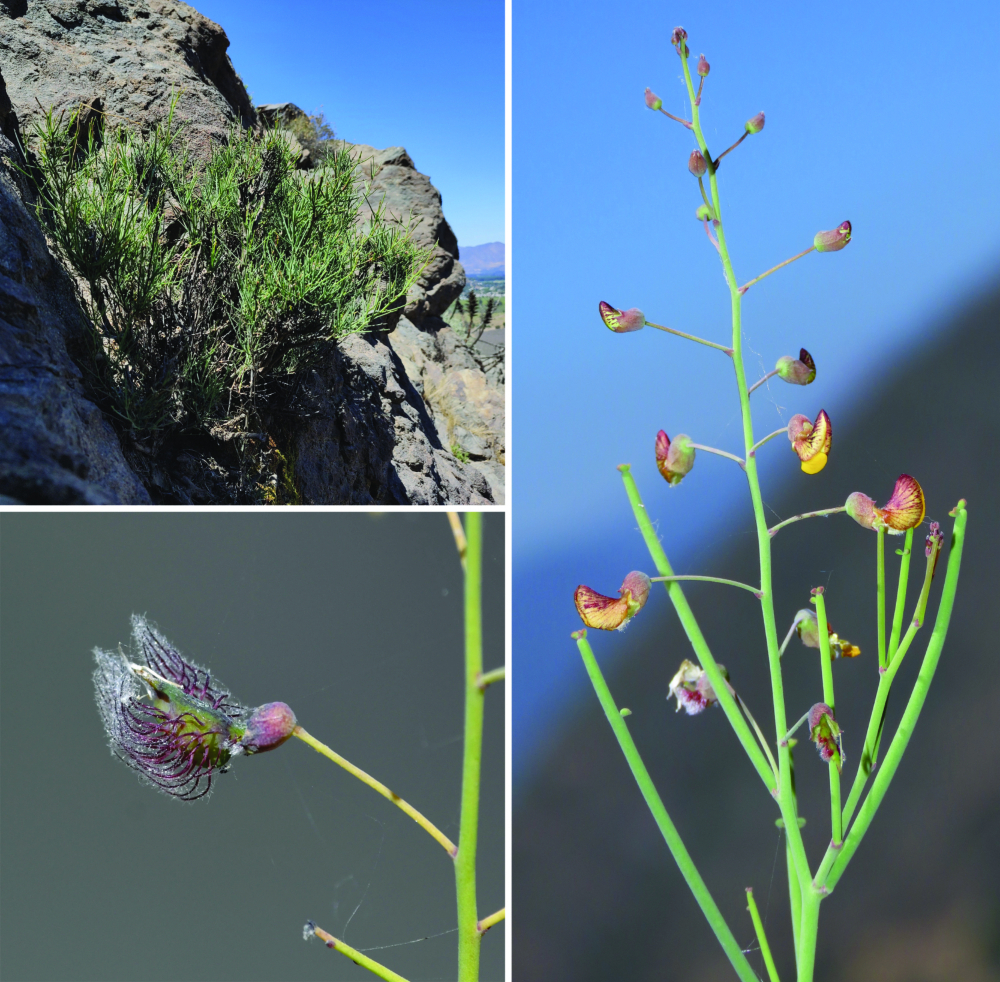 Ephedra-like habit growing in rocky crevices, flowers and fruit with plumose trichomes of Adesmia ephedroides. Photos: habit and fruit Benito Rosende; flowers Nicolás Lavandero.
A critically-endangered new species of Ancistrotropis from Brazil
Ancistrotropis pulchra (Papilionoideae) is a micro-endemic, known only from the Parque Nacional do Caparaó, on the border between the states of Espírito Santo and Minas Gerais, in Brazil. Because of its global rarity it has been categorized as Critically Endangered. It occurs in high-altitude grasslands near cliff edges, at around 1,900 metres elevation, within the Atlantic Forest domain. The genus Ancistrotropis belongs in subtribe Phaseolinae of tribe Phaseoleae and, along with Delgadoana and Sigmoidotropis, is placed in the Sigmoid-keel clade characterized by a hooded standard petal, sigmoid-shaped keel petals with a hooked distal tubular region joined by interlacing marginal trichomes, and wings that are laterally parallel and perpendicular to the standard.
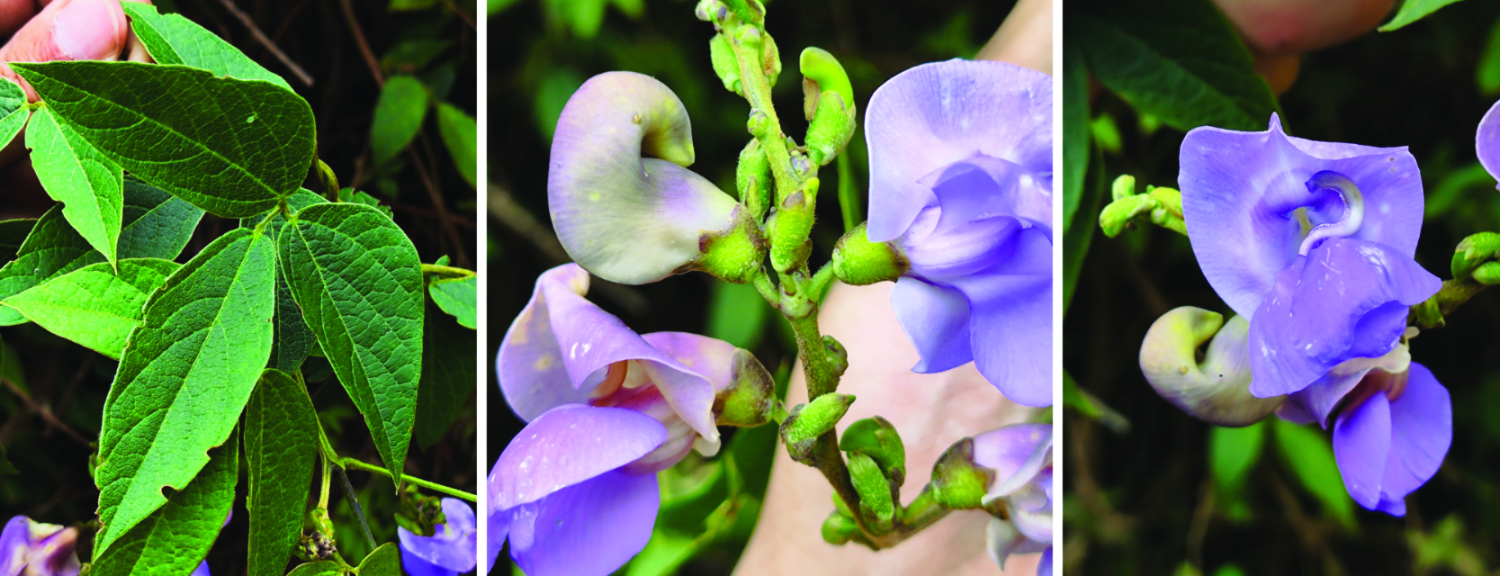 Flowers and leaves of Ancistrotropis pulchra. Photos: Felipe Santos.
Da Silva Santos, F., Lima Ribeiro, C., Snak, C., Delgado-Salinas, A. and De Queiroz, L.P. 2025. A new species of Ancistrotropis (leguminosae) from Parque Nacional do Caparaó (Brazil). Phytotaxa 726: 272–280. https://doi.org/10.11646/phytotaxa.726.4.4
Three new Chinese species of Apios
With just six species previously recognized in the genus, these three new species of Apios (Papilionoideae), expand the number of species by 50% and break the general rule that most newly described species belong in large species-rich genera. All three new species of Apios are endemic to different provinces of China: A. brevis in bamboo forests of Anhui Province, A. calcicola in karst forests of Guangxi and Guizhou Provinces, and A. chindiana in humid secondary forests in Zhejiang and Fujian Provinces. All are twining perennial climbers with white latex and have a hooded standard petal and coiled or curved wing petals and style typical of the genus Apios, and two of the species have tubers.
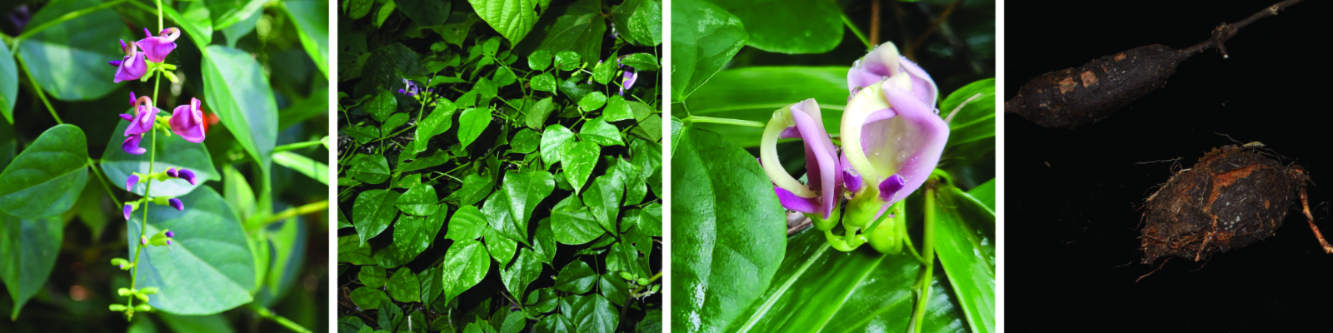 Inflorescence, trifoliolate leaves, flowers and tubers of Apios calcicola. Photos: Zhao-Cen Lu.
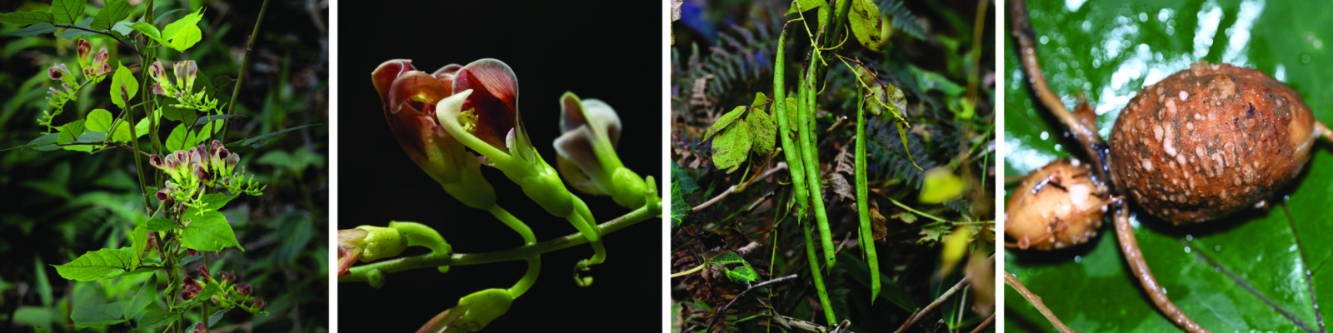 Habit, flowers, fruits and tubers of Apios chindiana. Photos: Jian-Sheng Wang & Jun-Feng Wang.
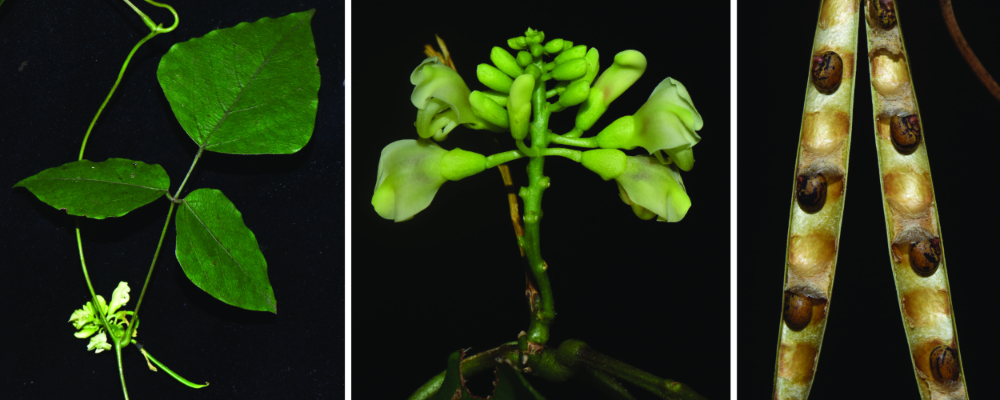 Trifoliolate leaf, inflorescence, flowers, pods and seeds of Apios brevis. Photos: Xin-Xin Zhu.
Wang, J.F., Jiang, K., Zhong, J.P., Chen, Y., Wu, D.H., Li, B.H., Pan, B., Wan, K.Y., Chen, Z.H. and Wu, L.H. 2025. Apios chindiana (Fabaceae: Papilionoideae: Phaseoleae), a new species from East China. Phytotaxa 697: 245-254. https://doi.org/10.11646/phytotaxa.697.3.3
Lu, Z.C., Wei, L., Song, Z.Q., Wei, S.J. and Pan, B. 2025. Apios calcicola (Fabaceae: Papilionoideae: Phaseoleae), a new species from limestone mountains of Southwestern China. Phytotaxa 726: 193-200. https://doi.org/10.11646/phytotaxa.726.3.7
Chen, Y., Shen, Y., Wan, K.Y., Pan, B. and Jiang, K. 2025. Apios brevis (Fabaceae: Papilionoideae: Phaseoleae), a new species from eastern China. Phytotaxa 725: 205-212. https://doi.org/10.11646/phytotaxa.725.2.7
The relentless enlargement of the genus Astragalus
Every year several new species of Astragalus (Papilionoideae), the largest genus of legumes (and indeed of flowering plants as a whole) with > 3100 species, are described. This year was no exception with > 10 new species published in 2025. Here we highlight three new species endemic to the stony, arid steppes of Mongolia and one narrowly endemic to northern Balochistan along the Pakistan–Afghanistan border. These add to the incredible diversity of the genus in central and south-west Asia.
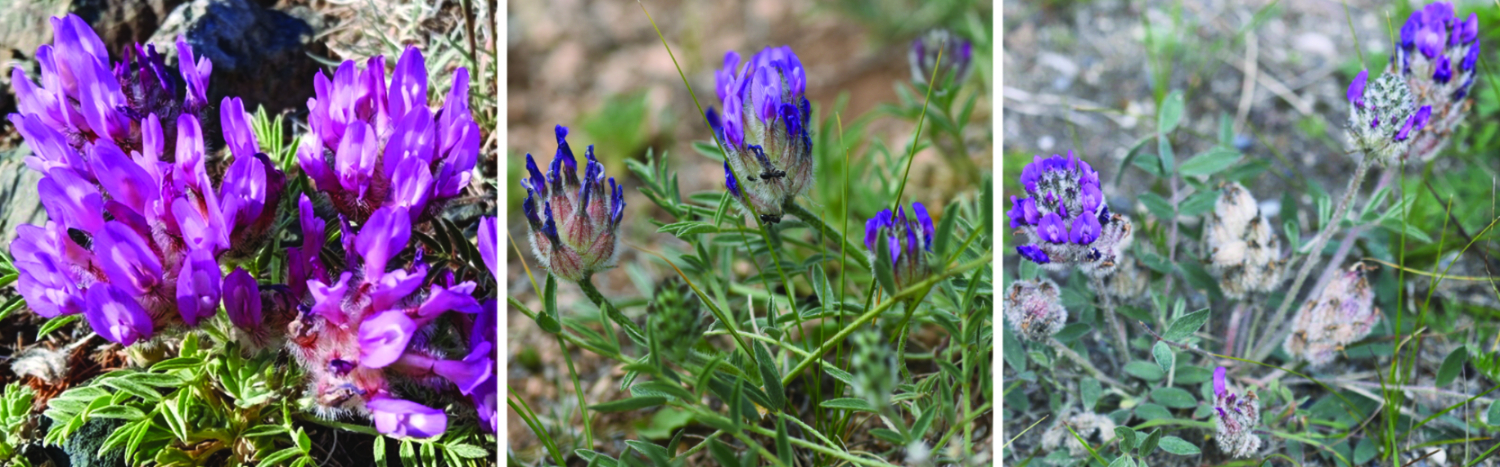 Astragalus uvsicus, A. oyunicus and A. teshigicus from Mongolia. Photos: D. Munkhtulga.
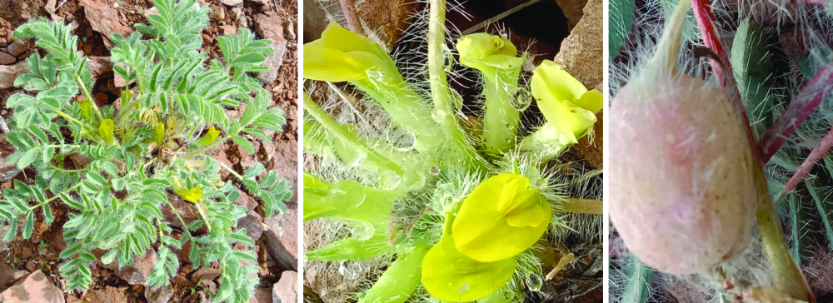 Astragalus zhobensis from Pakistan. Photos: Tahir Khan.
Munkhtulga, D., Baasanmunkh, S., Nyamgerel, N., Park, J.H., Tsegmed, Z., Tojibaev, K.S. and Choi, H.J. 2025. Morphological and phylogenetic analysis approach to three new species and a new section of Astragalus (Fabaceae) from Mongolia. PhytoKeys 255: 51-73. https://doi.org/10.3897/phytokeys.255.140805
Khan, T., Khan, N., Khan, A., Sultan, A. and Ishaq, K. 2025. Astragalus zhobensis, a new species of section Caprini (Fabaceae) from Zhob, northern Balochistan, Pakistan. Nordic Journal of Botany, p.e04845. https://doi.org/10.1002/njb.04845
Bauhinia angelae, a cryptic species from the Caatinga
Bauhinia angelae (Cercidoideae) is endemic to the Caatinga – the seasonally dry tropical forests – of NE Brazil where 15 species of Bauhinia are found, three of them endemic. The specific epithet honours Dr. Angela Maria Studart da Fonseca Vaz, former researcher at the Rio de Janeiro Botanical Garden, for her contribution to the knowledge of the Brazilian legumes, and especially for her research on Bauhinia and related genera in Brazil. This new species is a split from B. catingae and underscores the importance of careful analysis of seemingly “common collected species”, which often contain cryptic taxa hidden within their original circumscription, leading to problematic identification.
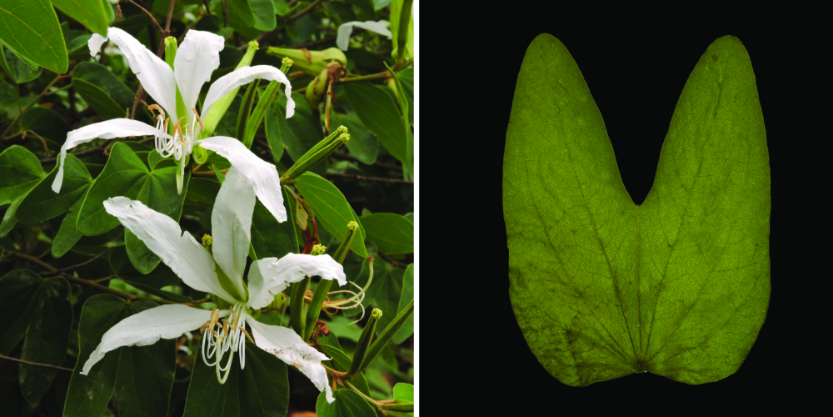 Bauhinia angelae flowers and leaf. Photos: Rubens Queiroz and Andrés Fonseca-Cortes.
Casas-Restrepo, L.C., Fonseca-Cortés, A. and de Queiroz, L.P. 2025. Bauhinia angelae (Leguminosae: Cercidoideae): An overlooked new species from drylands of Northeastern Brazil. Phytotaxa 691: 271-281. https://doi.org/10.11646/phytotaxa.691.3.4
Copaifera ferrazii: taxonomically challenging species delimitation
Species delimitation in the large pantropical genus Copaifera continues to be taxonomically challenging due to a high degree of morphological plasticity and overlapping morphologies. These challenges demand careful evaluation of multiple characters, as pursued here, in order to discern robust species diagnoses. Copaifera ferrazii is a large tree narrowly endemic to Amazonas State, Brazil and grows in tropical rain forest. The species description is magnificently illustrated with an elegant botanical line drawing and a beautifully produced composite photo-based colour plate that comprehensively encapsulates the morphology of the species.
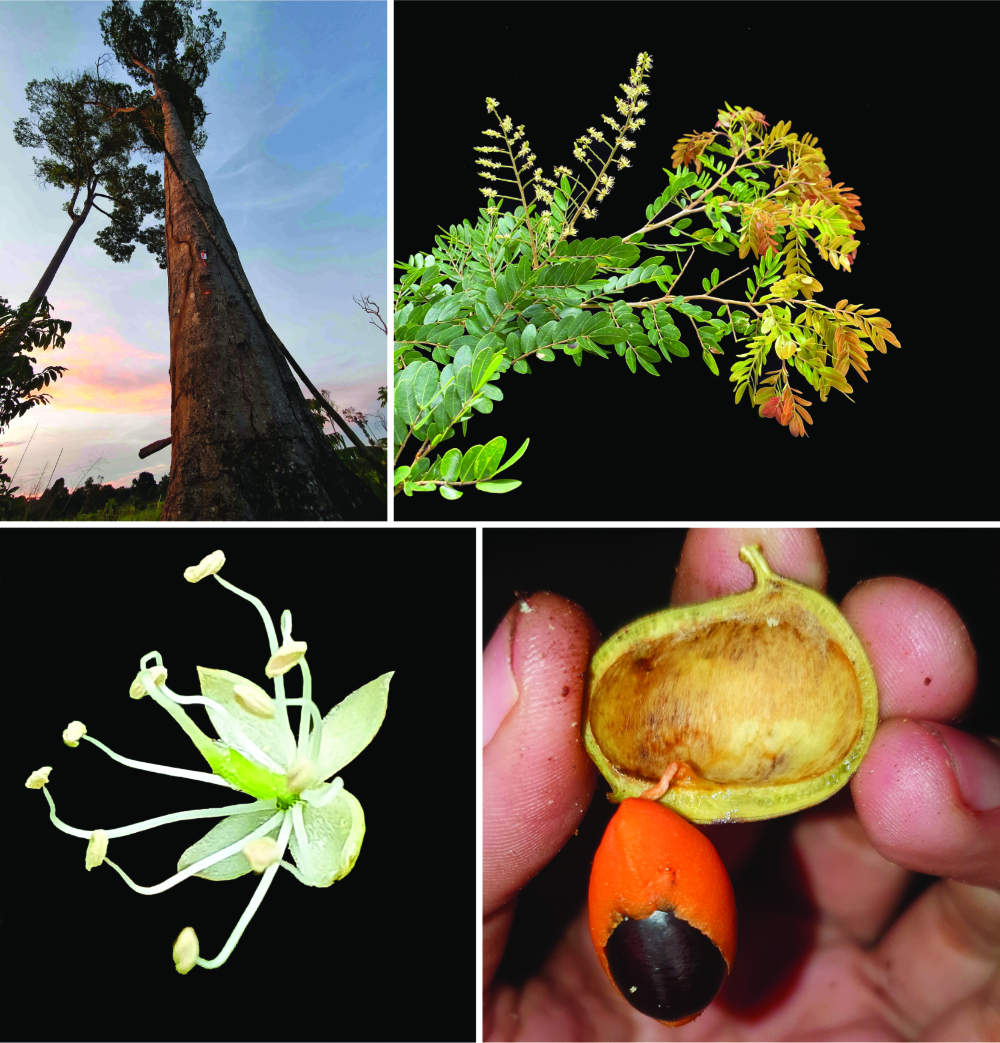 Tree form, foliage and inflorescence, flower and fruit of Copaifera ferrazii. Photos: Elzineide Moreira do Carmo.
do Carmo, E.M., da Cruz Vasconcelos, C., Calvi, G.P. and Ferraz, I.D.K. 2025. Copaifera ferrazii (Leguminosae: Detarioideae), a new Amazonian species from the eastern Madeira River Basin, Brazil. Kew Bulletin 80: 689–699. https://doi.org/10.1007/s12225-025-10298-5
Crotalaria luteopurpurea: an elegant new rattlepod from India
Crotalaria luteopurpurea (Papilionoideae), newly described from the drylands of Karnataka State in India, is a procumbent, ruderal, annual herb growing in loose sandy soils in and around cultivated fields. It has dimorphic leaves and individual stems usually bear a solitary flower. The elegant photo plate in the paper shows off the striking contrast between the bright yellow banner petal juxtaposed against the deep purple wing petals of the flowers of C. luteopurpurea, which owes its name to this dramatic flower colour contrast.
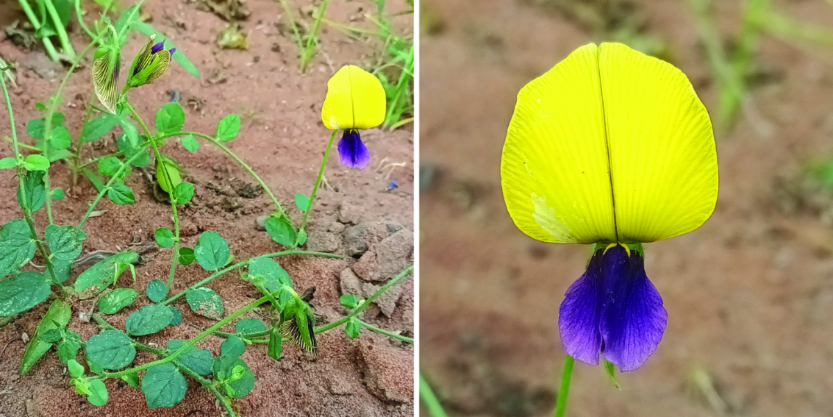 Annual herbaceous habit and solitary flowers of Crotalaria luteopurpurea. Photos: Jagdish Dalavi.
Dalavi, J.V., Ramesh, P., Basavaraj, S., Yadav, S.R. and Jadhav-Rathod, V.D. 2025. Crotalaria luteopurpurea (Fabaceae), a new elegant rattlepod from drylands of Karnataka, India. Rheedia 35: 13–18. https://dx.doi.org/10.22244/rheedea.2025.35.01.03
A spectacular new species of Derris from Thailand
Combined morphological, anatomical, and molecular evidence are presented to support the recognition of Derris longiracemosa (Papilionoideae) as a distinct species. A detailed description, distribution map, line drawing, photographs, and preliminary IUCN conservation status are presented. The species epithet, longiracemosa, refers to the unusually long inflorescences of the species which can reach > 150 cm, the longest recorded for any species of Derris. Derris longiracemosa is a liana, narrowly endemic to southwestern Thailand and restricted largely to karst limestone hilltops with wind-dispersed winged fruits. The authors suggest edaphic specialization to karst substrates has likely contributed to ecological segregation, setting the stage for divergence and eventual speciation within this complex landscape.
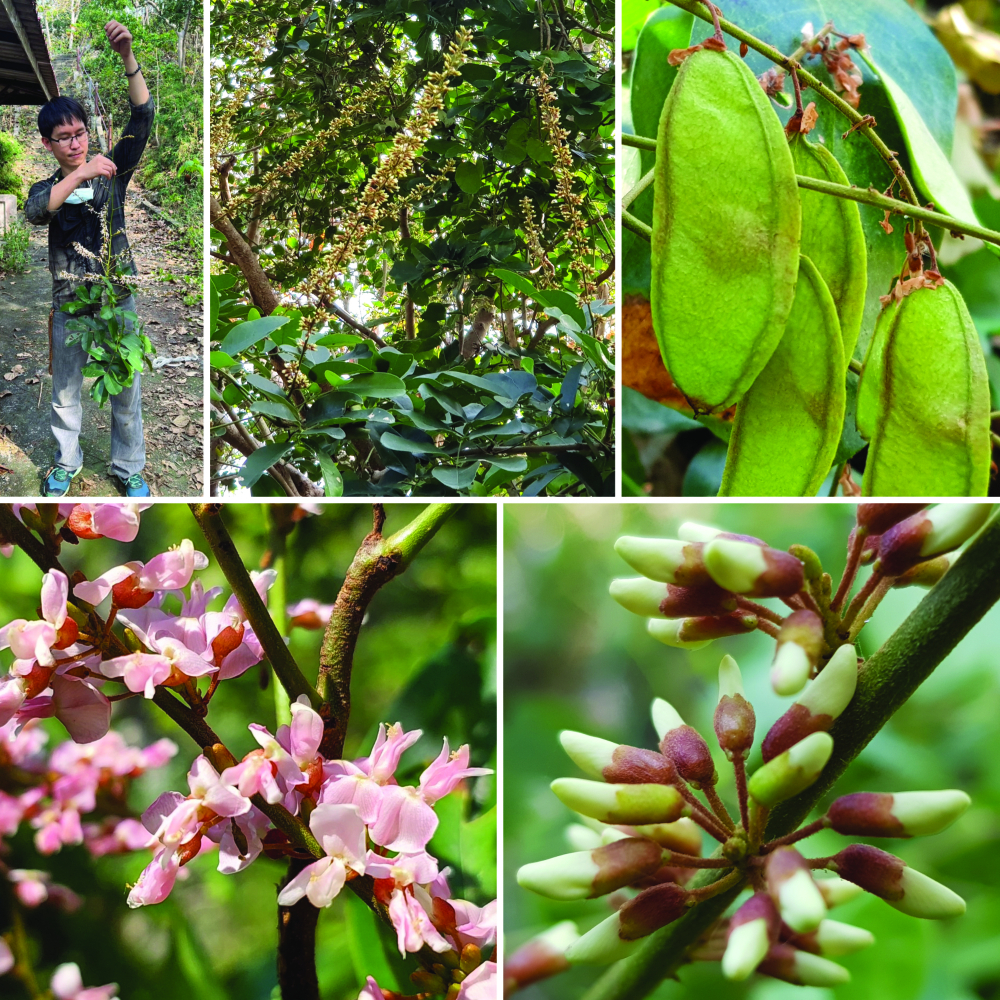 Derris longiracemosa: habit and inflorescences; close-up of inflorescence showing cluster of flowers on brachyblasts; flowers; unripe pods; leaves and long inflorescences. Photos: Yotsawate Sirichamorn.
Boonprajan, P., Oncham, S. and Sirichamorn, Y. 2025. Derris longiracemosa (Fabaceae), a new species from Thailand with extraordinary limestone adaptations and the longest inflorescences ever recorded. PhytoKeys 261: 13-32. https://doi.org/10.3897/phytokeys.261.156249
Erythrostemon guatemalensis: an endangered micro-endemic from Guatemala
Erythrostemon guatemalensis (Caesalpinioideae) is an Endangered micro-endemic to Dept. Sacatepéquez, at mid elevations in seasonally dry tropical forests and in the transition to montane forests of the Pacific slope of Guatemala. In common with many dry tropical forest tree species, E. guatemalensis is locally abundant, but globally extremely rare, with a total extent of occurrence of < 50km2. The description of this species is lavishly illustrated with five photoplates and two line drawings. As noted by the authors, in their phylogeny, E. guatemalensis is nested among accessions of E. exostemma, highlighting the need for a more densely sampled phylogenetic study of the E. exostemma species alliance.
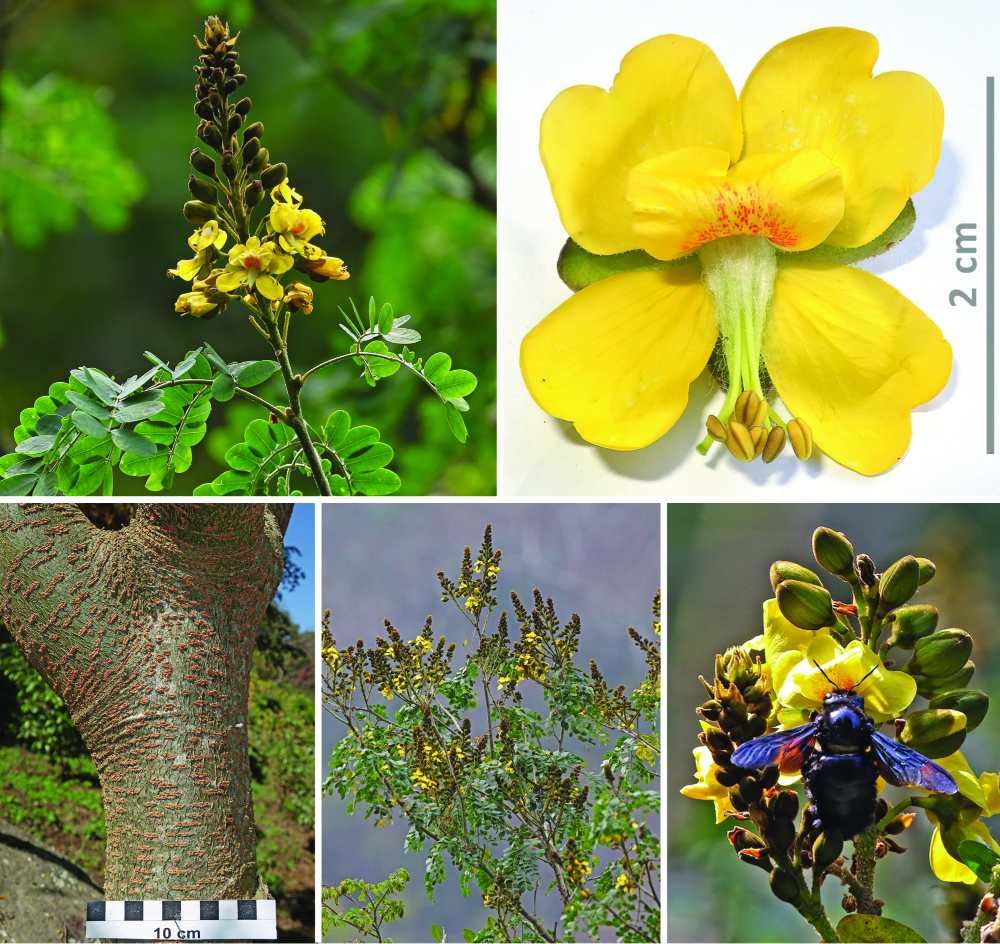 Bark and flowers of Erythrostemon guatemalensis and bee pollinator, Xylocopa frontalis on flowers. Photos: Knut Eisermann.
Eisermann, K., Lewis, G.P., Forest, F., Gagnon, E., Csiba, L., Aju, J. and Williamson, J. 2025. Erythrostemon guatemalensis (Leguminosae: Caesalpinioideae: Caesalpinieae), a new Endangered tree species from the Pacific Slope highlands of Guatemala. Kew Bulletin 80: 663-678. https://doi.org/10.1007/s12225-025-10300-0
A new stoloniferous Indigofera narrowly endemic in NE Argentina
Indigofera stolonifera (Papilionoideae) is a micro-endemic, known from just the type locality in Misiones Province, northeastern Argentina. The stoloniferous herbaceous habit with elongated prostrate branches which give rise to new individuals, for which the species is named, is unique among South American Indigofera.
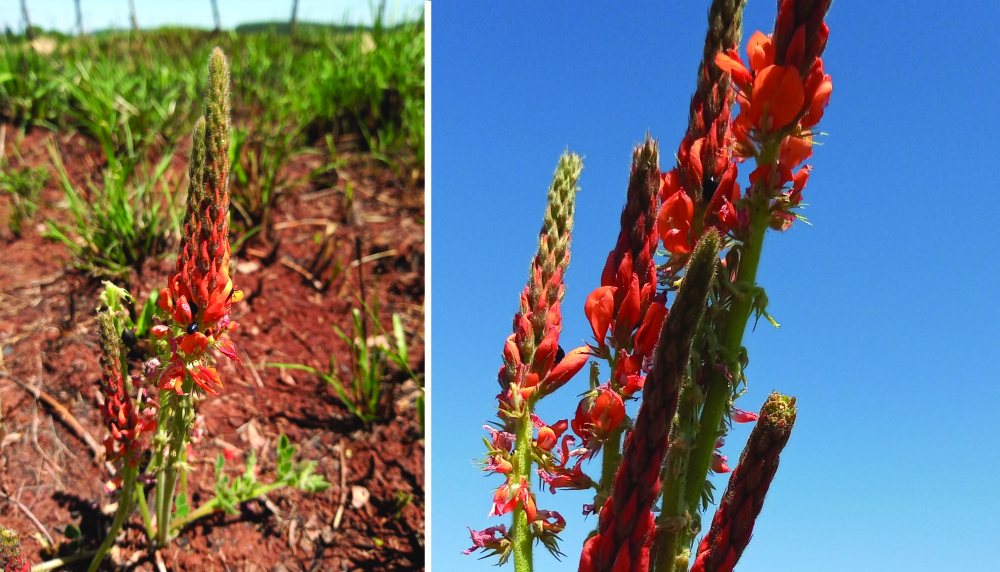 Indigofera stolonifera habit and flowers. Photos: Héctor Alexander Keller.
São Paulo, R.D.C.A.M., Snak, C., Ribeiro, C.L., Rocha, L. and Queiroz, L.P.D. 2025. A new species of Indigofera (Leguminosae, Papilionoideae) from Misiones with a key to species from Argentina. Phytotaxa 690: 293-300. https://doi.org/10.11646/phytotaxa.690.2.10
A new species of Macrolobium named for the Tukano people of the Upper Rio Negro, Amazonia
Macrolobium tukanorum (Detarioideae) is known from just two localities in the Morro dos Seis Lagos (Six Lakes Mountain) and the Serra do Tunuí, in the municipality of São Gabriel da Cachoeira in the upper Negro River basin of Amazonia in northwestern Brazil.
The species is named in honour of the Tukano people who inhabit the forests of the Upper Rio Negro basin and are the largest ethnic group within the Balaio Indigenous Territory. It grows in low-stature forests on rocky and sandy soils in the Serra de Tunuí, as well as on iron-rich canga in the Morro dos Seis Lagos, an area which appears to harbour a poorly-known flora with high levels of endemism of species adapted to iron-rich soils.
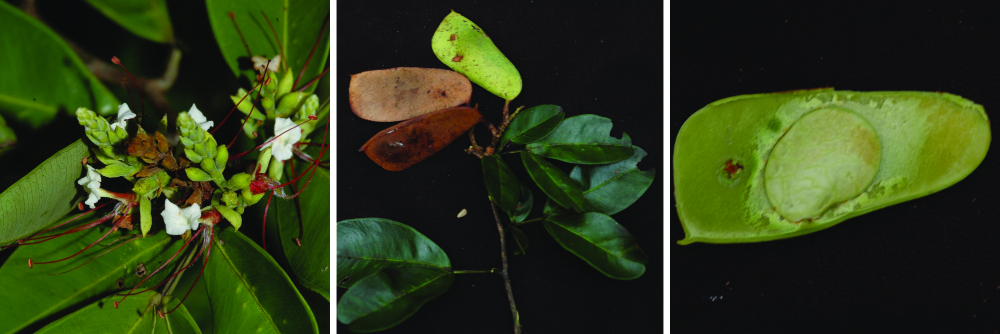 Flowers, fruits, leaves and seed of Macrolobium tukanorum. Photos: Mário Terra-Araújo.
Farroñay, F., Cardoso, D.B.O.S., Pilco, M.V., Terra-Araújo, M.H. and Vicentini, A. 2025. Macrolobium tukanorum (Leguminosae, Detarioideae), a new species from the Upper Rio Negro basin. Brittonia 77: 40-50. https://doi.org/10.1007/s12228-025-09827-0
A remarkable black-purple-flowered Ormosia from Ecuador
Ormosia neillii (Papilionoideae) is narrowly endemic to the botanically poorly-known Cordillera del Cóndor Region of south-eastern Ecuador. It forms a small or medium-sized tree on sandstone plateaus and, although globally extremely rare, it can be locally abundant in dwarf forests on Andean tepui-like formations on quartzitic white sand above 1000 m elevation, well above the typical elevations of other Ormosia species. Alongside occurrence in these unusual habitats, the species has remarkable blackish-purple flowers.
The species is named in honour of David Neill (1953–2025), an American botanist who dedicated over three decades to the study of Ecuadorian flora and who worked extensively on legumes (see Gallery of Leguminologists, this BB Issue).
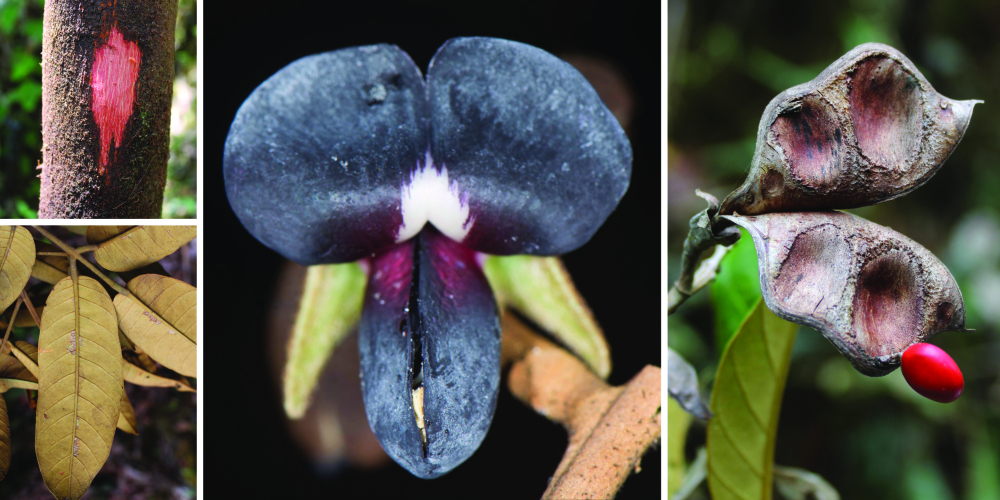 Trunk with bark slash, leaflet, flower and fruits of Ormosia neillii; photos Juan E. Guevara and John L. Clark.
Guevara-Andino, J.E., Clark, J.L. and Navas-Muñoz, D. 2025. Ormosia neillii (Fabaceae), a remarkable new tree species from the Cordillera del Cóndor plateaus in Ecuador. PhytoKeys 256: 21-35. 10.3897/phytokeys.256.147923
Tessmannia princeps: a canopy-emergent rainforest giant from Tanzania
Information provided by Andrea Bianchi, Museo delle Scienze, Trento, Italy & Udzungwa Corridor LTD, Iringa, Tanzania.
The idea that there are still giant, canopy-emergent rainforest legume tree species to be discovered and named seems at first sight surprising, but recent years have turned up a trickle of such novelties, including Dinizia jueirana-facao and Dipteryx hermetopascoaliana from the Mata Atlantica of Brazil. Tessmannia princeps (Detarioideae) from the Afromontane rainforests of the Udzungwa Mountains of Tanzania is the latest addition to these rare and cryptic legume giants. It is notable that T. princeps represents a brand-new field discovery with apparently no prior material of the species already in herbaria.
Tessmannia princeps forms a tree to 40 m ht and 2.7 m trunk diameter, with buttresses up to 15 m tall, radiating for up to 1.5 m from bole, and sometimes extending along the first branches. The specific epithet princeps from the Latin for the first, the foremost, the most eminent, refers to the canopy-emergent habit of the species. In common with the majority of newly described legumes, T. princeps is globally rare, known from fewer than 1000 individuals from just two populations, and is considered of Vulnerable conservation status. As part of the Udzungwa Corridor project, a groundbreaking initiative to restore Afromontane forest in Tanzania, T. princeps is being propagated and several hundred individuals are being planted each year in and around the forest patches where Tessmannia occurs.
Tragically, in October 2025, Aloyce Mwakisoma, a renowned plant expert from Tanzania’s Udzungwa Mountains, who co-discovered and co-authored T. princeps, and who appears in the photo below with the buttressed tree bole, was struck and killed by a bus near the village of Sanje in Tanzania.
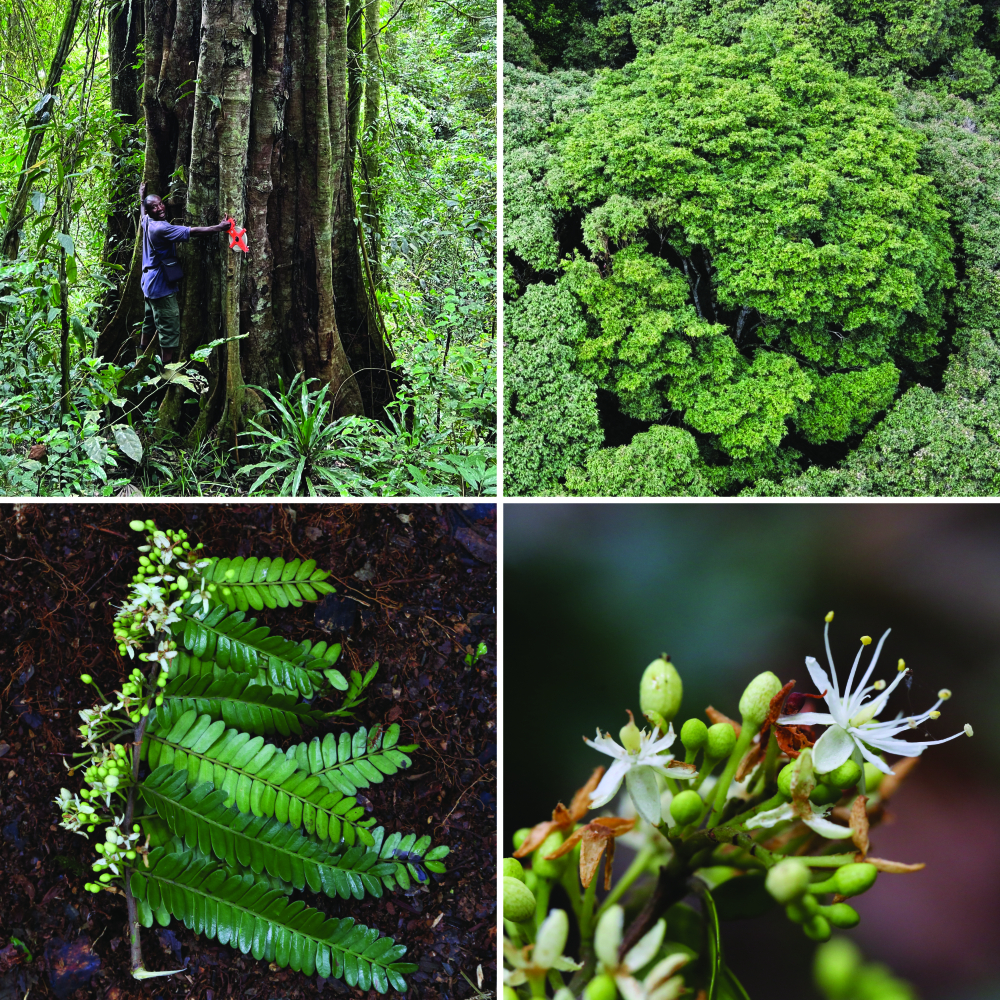 Aloyce Mwakisoma beside buttressed bole, canopy-emergent tree crown, leaves and flowers of Tessmannia princeps. Photos: Andrea Bianchi.
Bianchi, A., Tomasi, L., Mwakisoma, A., Barbieri, M. and Luke, Q. 2025. Tessmannia princeps (Fabaceae), a new rainforest tree from the Udzungwa Mountains, Tanzania. Phytotaxa 694: 109-118. https://doi.org/10.11646/phytotaxa.694.2.1